For those that haven’t read it yet, this is my latest short story, originally published in The Blowout’s first issue, Heat. When you read it, I hope you take your time. Enjoy!
—
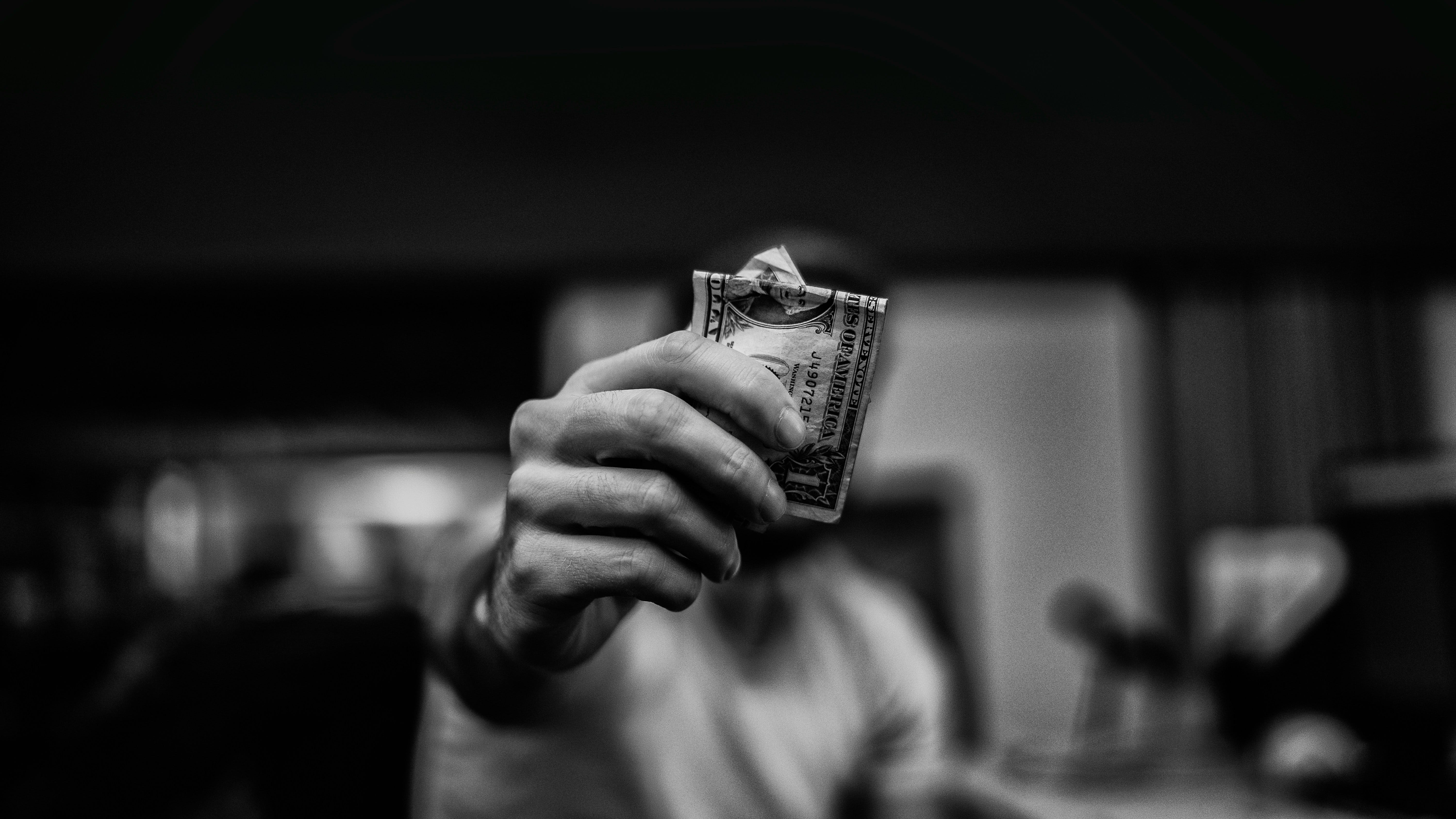
He meant to peel this sticker off by now, but after a June of sweat, a July of rain, and an August figuring there’s no point washing his shirt for the first time anyway, Tyler treasured the trophy on his chest. Standing in the center of the square, arms, neck, and legs more chocolate than a Hershey’s smeared across the brick under his feet, Tyler took a bow for his audience, dropping his hat before them with a twenty dollar bill slipped in for good measure, standard company protocol.
The company had given him a bedroom, a straw hat, a t-shirt, and a script full of lies to memorize. Below windows without blinds, he would roll off a bare mattress in the mornings to brush his teeth and pick his hair because why buy sheets when no one else would sleep under them? Why cut his hair when no one else would see the dandruff? Reciting the approved lies, mixed in with his favorite lies, Tyler would grab his shirt off the ground and slap a fresh sticker in the same old spot over his heart, satisfied by the circle underneath, still unsullied by a summer of shine. “The university made its fortune through good old fashioned agriculture, ladies and gentlemen. Mother Nature and Father Time worked the fields for Uncle Sam’s critical crop. That’s right, Tobacco! And as you can tell by my uniform, I too, was cured in the sun.”
Tourists tip bigger tips if a weathered tour guide shares his special stories, not his special secrets.
His secrets: Germans don’t ask questions. Germans do carry hundred dollar bills. Tell the Chinese you are a student. Don’t tell them the school offers free tours by students. Never waste time with old black men. They think a dap and a nod of mutual recognition are worth a free trip around campus. Wouldn’t the ancestors want Tyler to afford his education, or, at the very least, cover the beer tab with his buddy that night? Tyler’s teachers may have taught him to treat everyone equally, but Tyler’s tips taught him to trust stereotypes.
Pamphlets in his pocket and baking with the bricks, he asked God to bless a white family of four after they blessed him with Ulysses S. Grant. “Appreciated,” he said, smiling crooked from dimple to dimple. “If you enjoyed the show everyone, please write a review and remember my name is Tyler! But if you didn’t, then my name is Jefferson Davis.” Family by family, selfie by selfie, question by backhanded compliment, the remaining retirees and road trippers stepped forward, Tyler’s hat birthing a litter of George Washingtons.
Shins splinted but finished with another backwards walk around the buildings, Tyler shuffled to the office in post-mortem thought. The housemate who hid his red eyes with gas station glasses. The chipper yet ruthless veteran of two summers who soaked her skin in SPF 60 and code switched with Spanish speakers. What did they do? The cornfed quarterback whose perfect posture pulled in way more than what Tyler’s bombastics and theatrics did every day. Did he do what Tyler did? Did he take his strangers to the statue of the smoking man, climb to its shoulder, and proclaim “After the Civil War, overnight legislation stoked the flames that General Sherman had started. Labor costs blazed through the economy and the University’s coffers.” While those same strangers rubbed the cigarette raw in the statue’s shiny lips, would the cornfed quarterback huff and puff and prepare to jump off? “Nobody could chop and roll tobacco fast enough. Not until 1881, when James Bonsack dropped out of school to invent the cigarette rolling machine, which could do the work of over a dozen people. So as I like to say, with a chop, drop and roll, Mr. Bonsack became the University’s greatest firefighter!”
Did the other guides’ stunts include rolling on the ground?
At the end of that day’s lunch break, the usual company-sponsored hoagie and coke, Tyler had perched against a pillar in one of the square’s scarce slivers of shade. He would study, observe. The cornfed quarterback had taken no bow for his audience, instead holding his hat before the parents of hopeful high schoolers, teaching them to pay a proper fee. “Pay what the ticket for our time together was worth,” he would say. “I know your time is valuable.” In his hat, the cornfed quarterback must have reaped a grand. A guide only got to keep a fifth of the tips. In his hand, a little extra.
Standard company protocol: Once in the office, and only in the office, count all cash from the hat, record total, seal in a signed envelope, then deposit all cash into the safe. Lock safe. Report total upstairs. Entitled share of twenty percent will be allotted in bi-weekly paychecks. Do not detour between end of tour and the office.
Before starting down the cobblestone street to the office, Tyler stretched his legs while clutching his hat, bills pressed against his sweaty faded t-shirt. Walking and talking and yelling all day sapped his stamina but selling the same stories every other hour on the hour tested Tyler’s sanity.
What were his test scores? Is he really a student? Was he an actor?
He would answer the same questions from different strangers with the same minstrel smile.
When you take the photo, can you do the face? Is the tour free?
Tyler never used the word “free.” He hated to devalue himself. He always amplified his voice, air sucked down deep into the pit of his diaphragm, expelling his animated rendition of Please Pay Me Now.
Every guide had a tactic for their paycheck. Enthusiasm was his.
Crossing the cobblestones, Tyler looked both ways, spotting the white-streaks-of-sunscreen vet on her routine stop at a corner coffee shop, a stop earlier than the return to the square, but a stop excluded from the company script. Sometimes, her ponytail, even more sun-bleached than Tyler’s uniform, had lured enough curious strangers during the tour that the group spilled out into the street. “Lo siento, mi amores, we’re almost done,” she would say, holding her empty Venti with one hand and cash out front in the other, “But, before our time together ends, let me introduce you to my best friend, Andrew Jackson!” Despite the nervous giggles near her favorite ATM, the withdrawals must have always made up for the followers she’d lost along the way. How many bills found the path to her back pocket?
Tyler had assumed every guide honored the honor system. Count all cash from the hat and all that.
Checking for any singles that might have spilled into the street, he walked down the block toward the thick scent of garbage and grease.
Wall to sink to toilet to safe to wall, the office was a dim damp room in the basement of a sandwich shop, serving neither hoagies nor coke; besides the chittering rats, the roaches were the only other spies that could feasibly fit under the bathroom door while Tyler dumped his straw hat, an infestation of George Washington’s face scattering across the floor worse than the roaches or the rats. These tourists were so un-American. Tyler, stomach grumbling, sifted and sorted the tips. His entitled share from the tour could barely cover a beer, burger, and fries from upstairs, but who would miss the rare blessing gifted by that white family of four if it happened to go missing? The company couldn’t know whether it flew into Tyler’s wallet, or ever existed in the first place. He had honored the honor system all summer, but what did that do for him other than maintain his moral superiority and one-sided sense of competition with the cornfed quarterback, whose Southern sense of hospitality would charm suburban mothers into sacrificing their hard-earned dollar despite how hard it must have been for him to fit such an inflated ego through the office door? Maybe he shimmied sideways. Maybe he just sat on the toilet seat, counting how much every tourist’s time together with him was worth; as not yet satisfied with his gelled blonde hair, clean shaved chin, and perfect fake white teeth already plastered across the company’s promotional pamphlets and handed to them like counterfeit currency, belles and bros and the fathers of would-be recruits, as if tethered to his hip, would follow the cornfed quarterback’s physique out of the square, through towering metal gates, down and around the Grand Lawn’s path of poplar trees, never once ready to attack the cornfed quarterback’s facts or question his logic, just nodding along to his voice carrying across the fresh cut grass toward the white-washed Old Mint.
“In 1861, the first Confederate currency, the greyback, was issued, paying citizens back with interest! But as the war required more for the economy, the local mint stepped in to print more, and just like General George during the revolution that made our great nation, the state promised to pay people back, after the war. Greybacks are a coveted collector’s item now, but beware everyone, fakes are everywhere! The mint did what was necessary with new bills flowing directly into the war effort helping to pay soldier wages. Also, tobacco was a standard morale ration during the war. So not only had our institution molded minds, it kept the boys fighting the good fight.”
Witnessing such a silent procession had often put a price on Tyler’s free lunch of Not Enough Hoagie and Too Much Coke. The company could only sponsor so much, taunting Tyler with each trek past the grill and the fryer, down the steps to the office, the air begging for better circulation. He could poop in office if he wanted, but somehow had to pay for the privileges above its moldy ceiling. For all the violations the fellas avoided in the sandwich shop upstairs, their bribes to the health inspector hadn’t dented their portion sizes. Nor their winks or waves or culinary favors reserved for the vet, who could seldom be caught walking out of the shop without her white cream, self-esteem, and a belly full of beef.
Tyler wasn’t the fellas’ type. So with a burger on the brain, he kept sifting the cash between his flip flops, finding three of the vet’s best friends in the pile. Each one could have added a couple extra pints or late night leftovers to his future, but the maintenance of his morals meant forgoing the burgers and beer for the pre-paid mustard and lunch meat, congealed and waiting in the mini-fridge by his bedside. Just a few blocks away, he could shower with a belly full of bologna and shake the smell of oil. How much money had Tyler saved not washing that t-shirt?
Five bucks a load.
Seven loads a week.
The math worked out. Besides, handwashes would have defeated the whole punchline of curing his uniform. Tyler could smell himself, but no customer ever seemed to notice. He had woken up that morning with an empty stomach and only enough time to sprint to the start of his first tour, thanking his straw hat and lung capacity for hiding his matted hair and halitosis.
“Welcome, welcome to the show everyone, we’ll be friends for the next hour or so, as long as (insert smile) you stick around to follow your humble servant. My name is Jeff—oh wow, huh, bleh. Tyler, my name is Tyler!”
Across the campus, a booming voice and long legs allowed him to keep distance from his customers, selling the script’s stories all the way to the Old Mint, mimicking the cornfed quarterback’s cadence, but adding more flair, more volume. He chose a few different facts. “The first thousand dollar note featured former American presidents, John Calhoun and Andrew Jackson. Other notes included imagery of river crossings, folks working fields, and the burgeoning railroad system. Fast forward, and today’s twenty will soon make way for one of America’s greatest conductors, Harriet Tubman!”
“Sure, we’ll see,” a man said, some of Tyler’s potential tips then walking out from the crowd.
Count all cash from hat.
No Tubman, and no extra Jacksons, Germans, or Grants, just copies of George’s face to establish his share from the day’s last grind in the sun, Tyler flushed the office toilet and stuffed his stack of tips into a new envelope, slotted in the safe next to the two packed tight from the cornfed quarterback’s last tour.
Only the red-eyed housemate had envelopes as thin as Tyler’s; standing stoic in the square didn’t attract much attention beyond the company’s pre-paid reservations. Less time soliciting strangers, more time hand-rolling cigarettes in the shade. As Tyler would chew his cola-tinted ice while handing out stickers and pamphlets in the square, Red Eyes would smoke to the side and ask how much he really trusted the company totals.
Red Eyes’ rendition of the Old Mint: They never adopted the gold standard. So when they needed more money, they made more money. When the world knew they wouldn’t win, they made more money. Gold and silver were scarce and everyone took matters into their own hands. So, here’s a joke. How do you tell the mint and a counterfeiter apart?
Tyler would ask where the humor was. Red Eyes would ask why their entitled share was only twenty percent.
Once the safe was sealed, tips were beyond the bounds of company protocol.
In the rusty mirror above the office sink, Tyler popped a few pimples. He couldn’t sack the cornfed quarterback, but safe locked, tips signed, sealed, and reported with the fellas, blessings and beer tabs accounted for, Tyler left the sandwich shop. He trashed the pamphlets in his pocket and walked the cobblestones home only to be stopped by a man that could have been kin.
“My fault son,” the man said, dapping Tyler up. “I didn’t have it earlier, but I’m glad I found you. Stay in school now. I know I’ll be reading about you someday, so keep doing us proud.” The man shook Tyler’s hand, gave him a great big grin, and nodded goodbye.
Tyler hid the hundred dollar bill under his hat, until he got home. He called his buddy, told him “Be there in an hour,” then let the hot water hit him with his shirt still on.
Before stepping out, Tyler held Franklin up to the light to check if he could change colors.